404
Views
0
Saves
About OpenClaw
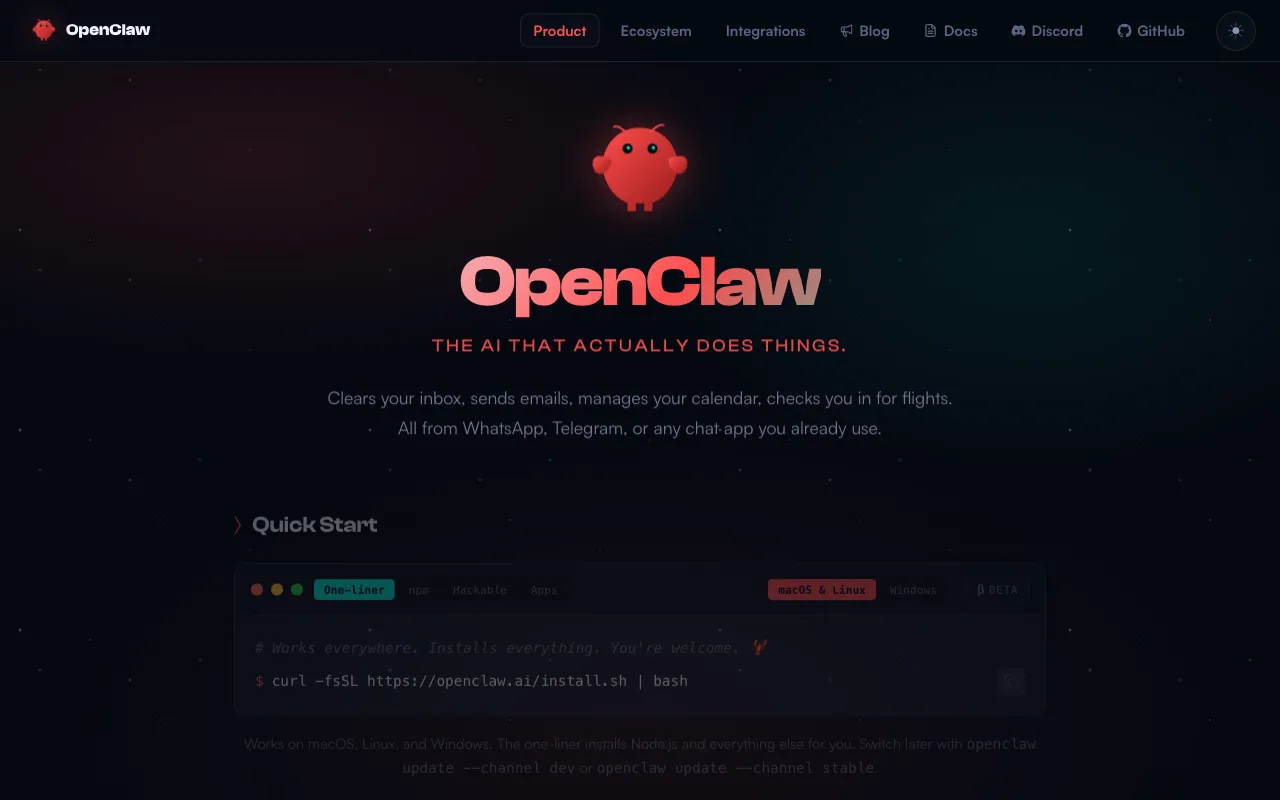
OpenClaw is an open-source personal AI assistant that runs on your own machine (Mac, Windows, or Linux) and integrates with messaging apps you already use — WhatsApp, Telegram, Discord, Slack, Signal, and iMessage. Created by Peter Steinberger, it acts as a Jarvis-style autonomous agent that can clear inboxes, manage calendars, run terminal commands, control your browser, and execute multi-step tasks on autopilot.
Updated 6/23/2026
Key Features
- Self-Hosted & Open Source — Runs on your own machine; data and context live locally, not in a walled garden. Bring your own API keys from OpenAI, Anthropic, or local models via Ollama
- Multi-Platform Chat — Works in DMs and group chats across WhatsApp, Telegram, Discord, Slack, Signal, and iMessage
- Full System Access — Read and write files, run shell commands, execute scripts, and control your web browser — full access or sandboxed, your choice
- Proactive Heartbeat — Every 30 minutes (configurable), the agent wakes up, checks a checklist file, and decides if it needs to reach out or perform a task autonomously
- Persistent Memory — Remembers you and becomes uniquely yours; preferences, context, and conversation history persist 24/7 as plain Markdown files on your machine
- Custom Agents — Build autonomous bots that run 24/7 on schedules or triggers, handling tasks like triaging support tickets, generating reports, or monitoring GitHub repos
- Skills & Plugins — Extend with community skills from ClawHub or build your own; the agent can even write its own skills
- Persona Customization — Define your agent's personality and memory in specific files, allowing it to maintain consistent behavior across platforms and sessions
Pricing Structure
- Open Source — Free — The software is 100% free and open source. You bring your own server (or run locally) and your own AI model API keys. No subscription, no usage limits, no vendor lock-in.
Why People Use It
OpenClaw is the first AI assistant that actually does things instead of just talking. It has full access to your machine, your files, your email, and your calendar — and it works proactively, not just when you ask. For power users who want a truly personal AI that runs on their own infrastructure with zero vendor lock-in, nothing else comes close.
See OpenClaw in Action